Main Content
The Rutgers Agrivoltaics Program is studying how an array with vertical bifacial panels affects forage growth and quality as well as cattle behavior
What are we going to learn?
Grass Growth and Quality
Do vertical panels affect the amount and the nutritional quality of the grass? The shade created by vertical panels may alter the microclimate around the panel rows, which may help or hinder grass growth and its nutritional quality.
Cow Behavior
How do cows use the grazing areas around the panels? Using cameras that take photos every 5 minutes, we can track where cows spend their time. Do the cows prefer grazing near the panels or do they spend more time in the control pastures that have no panels? Do they rest in shaded areas created by the vertical panels, or do they prefer the dedicated shade structures we built for them? Do they avoid grazing certain row configurations (e.g., panel rows that are spaced closer together)?
Meet the Cows!
The cows grazing around the solar panels during early summer 2026 are from the Rutgers University beef cattle breeding herd. These brood cows are used as part of an undergraduate teaching program. The herd consists of Angus (black) and Hereford (red & white) cattle. Their names are Ideal, Queen, Fizzle, and Blossom (Angus), as well as Misty and Flurry (Herefords), and their ages range from 3 to 10 years.
Why does this research matter?
Our research helps answer an important question: Can we maintain productive and healthy grazing systems while simultaneously producing solar energy?
By understanding how solar array design affects both plants and animals, we aim to identify solutions that work for farmers, crops and livestock, as well as renewable energy goals.
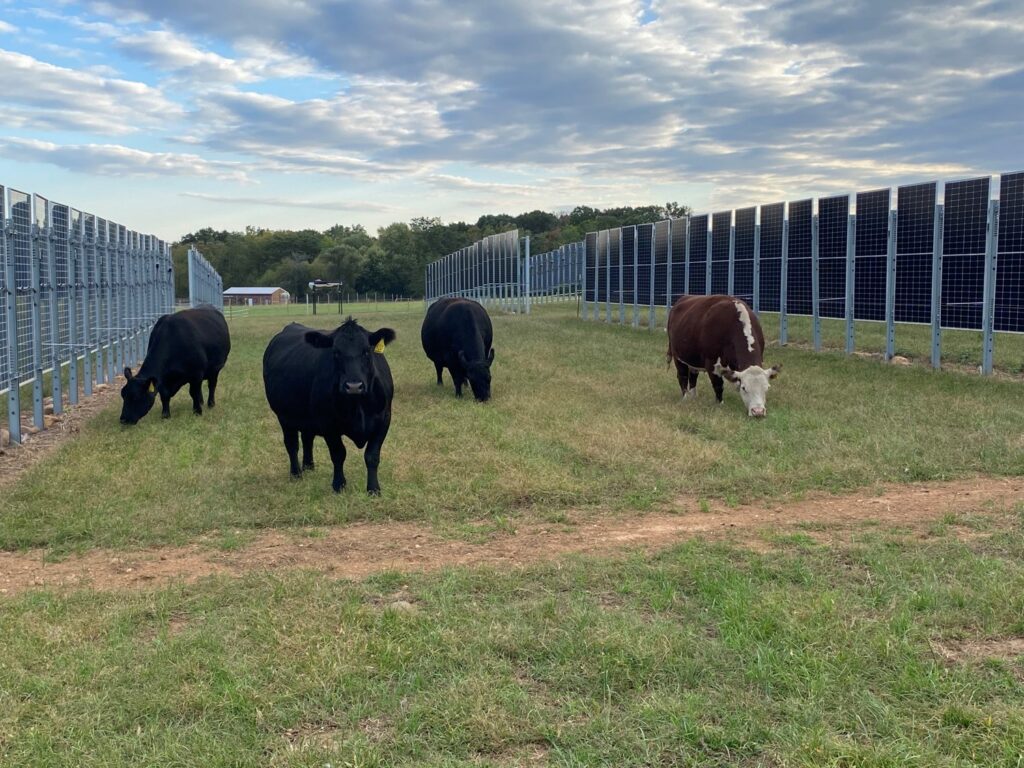
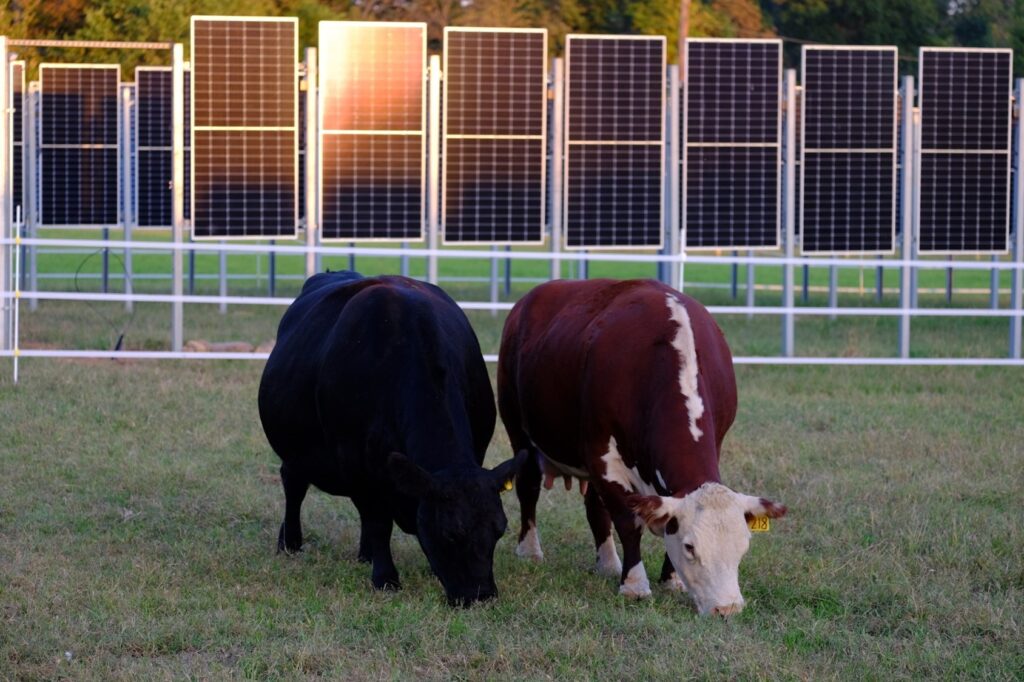
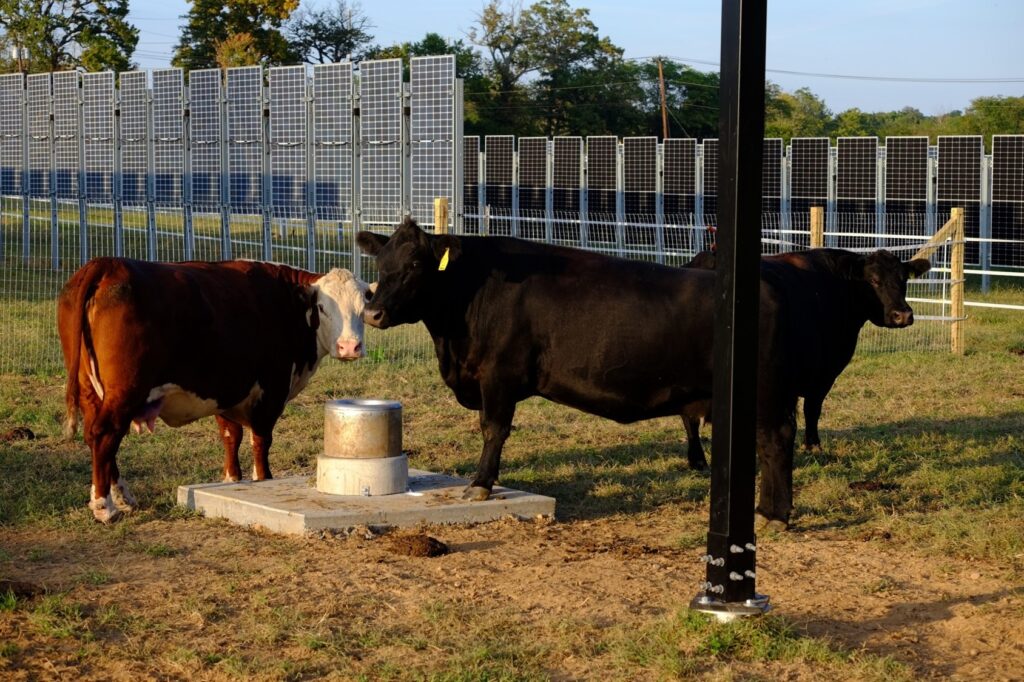
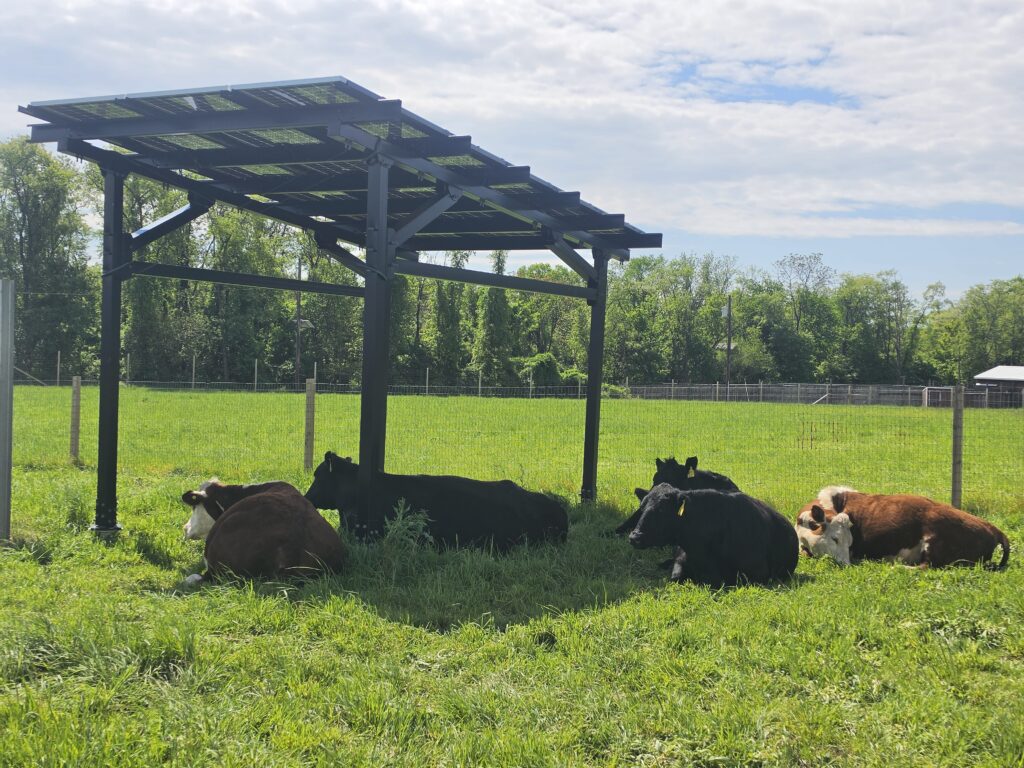
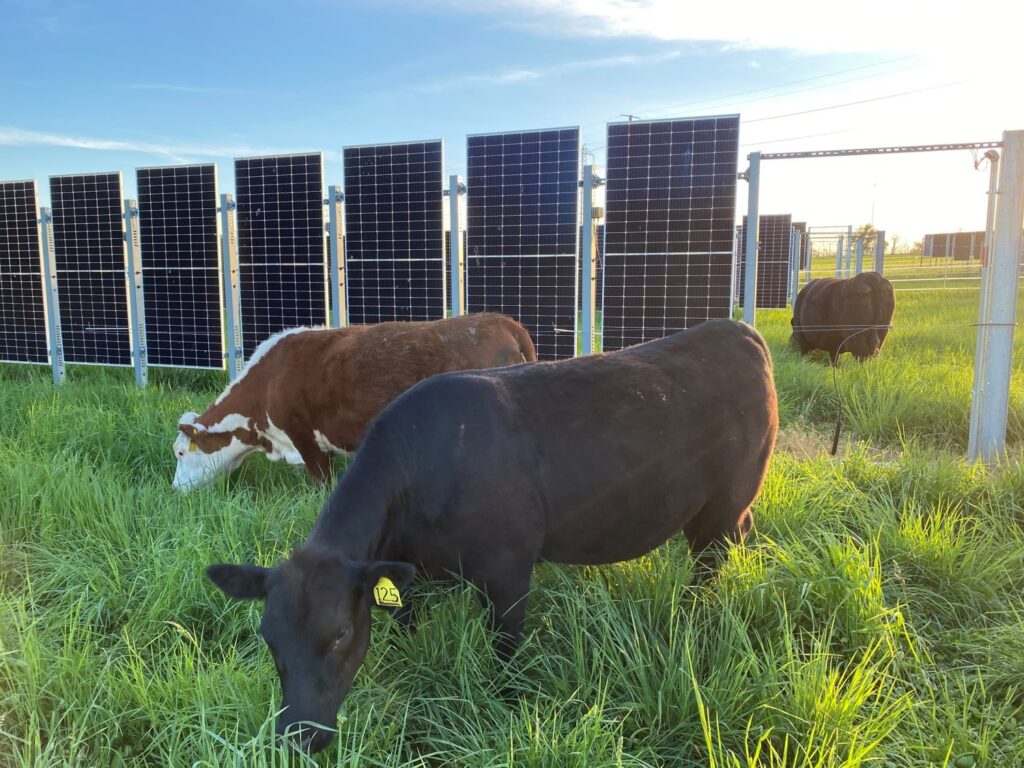
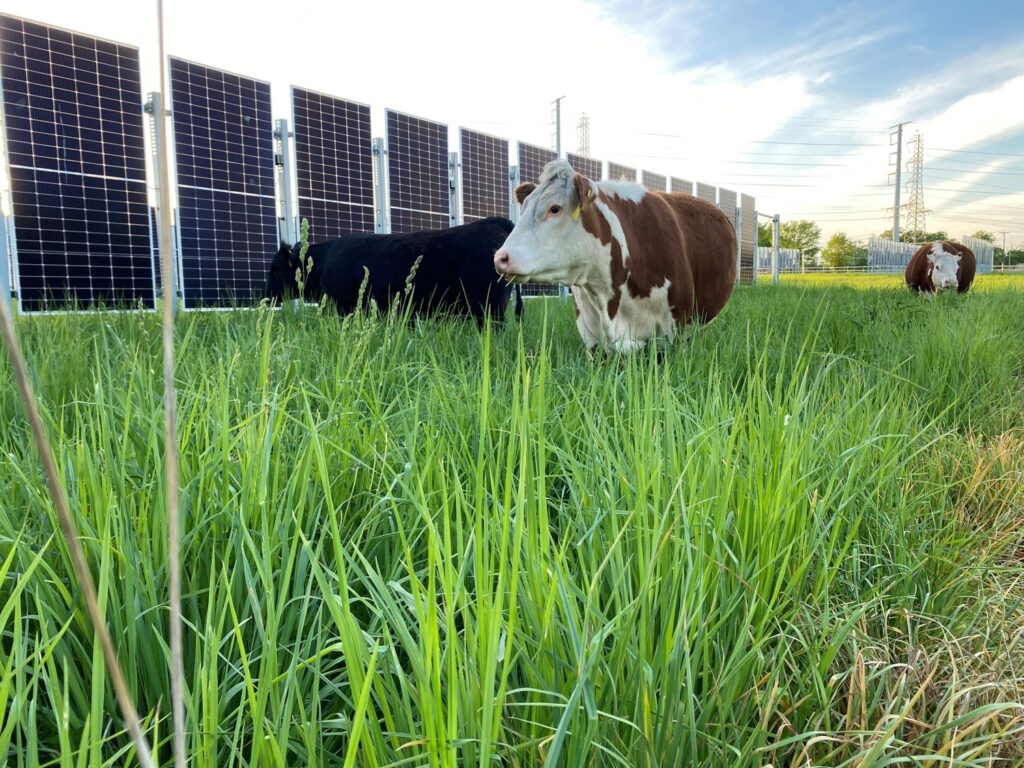
Images are protected under copyright, Rutgers Agrivoltaics Program 2026. Contact for permission to use photos
Experimental Design
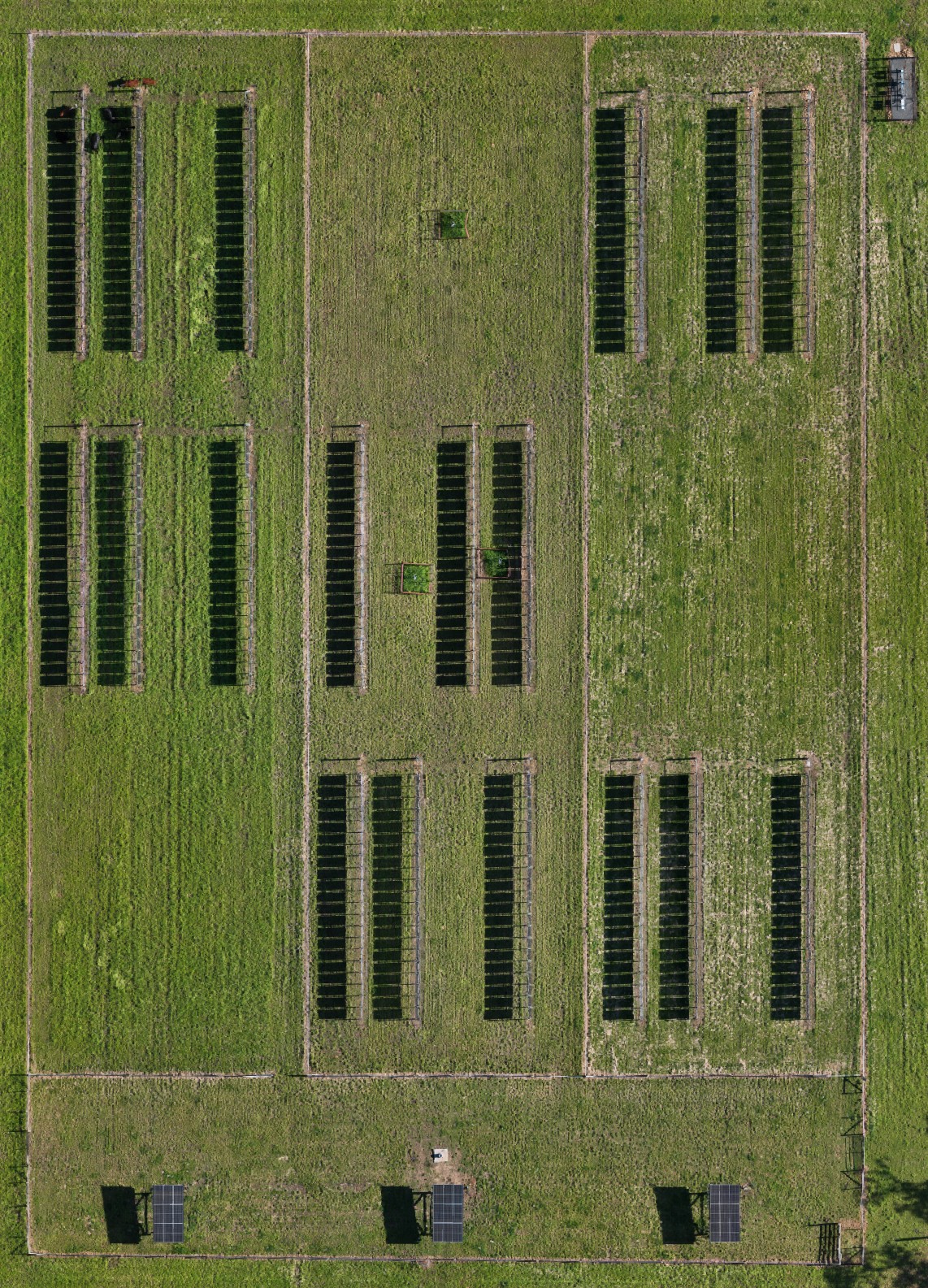
Vertical bifacial solar panels were installed in three randomized blocks. Each block contains four solar array configurations and one control pasture (without solar panels). Each panel row consists of 21 solar panels. Some panel rows have a clearance height of 2 feet and other rows have a 4 feet clearance height. The panel rows are spaced either 20 or 40 feet apart. The array configurations can be compared to the control pasture and to each other to understand how the solar panels affect different responses such as grass growth and cattle grazing patterns. The three blocks are considered replicates, which allows for improved statistical analysis and helps to ensure reliable results. Please check out the video on our Animal Farm page for an illustrative overview of the experimental layout.